Living with dialysis
Everything you need to know before you come
Opening hours, access, on-site services: we have thought of the details that matter.
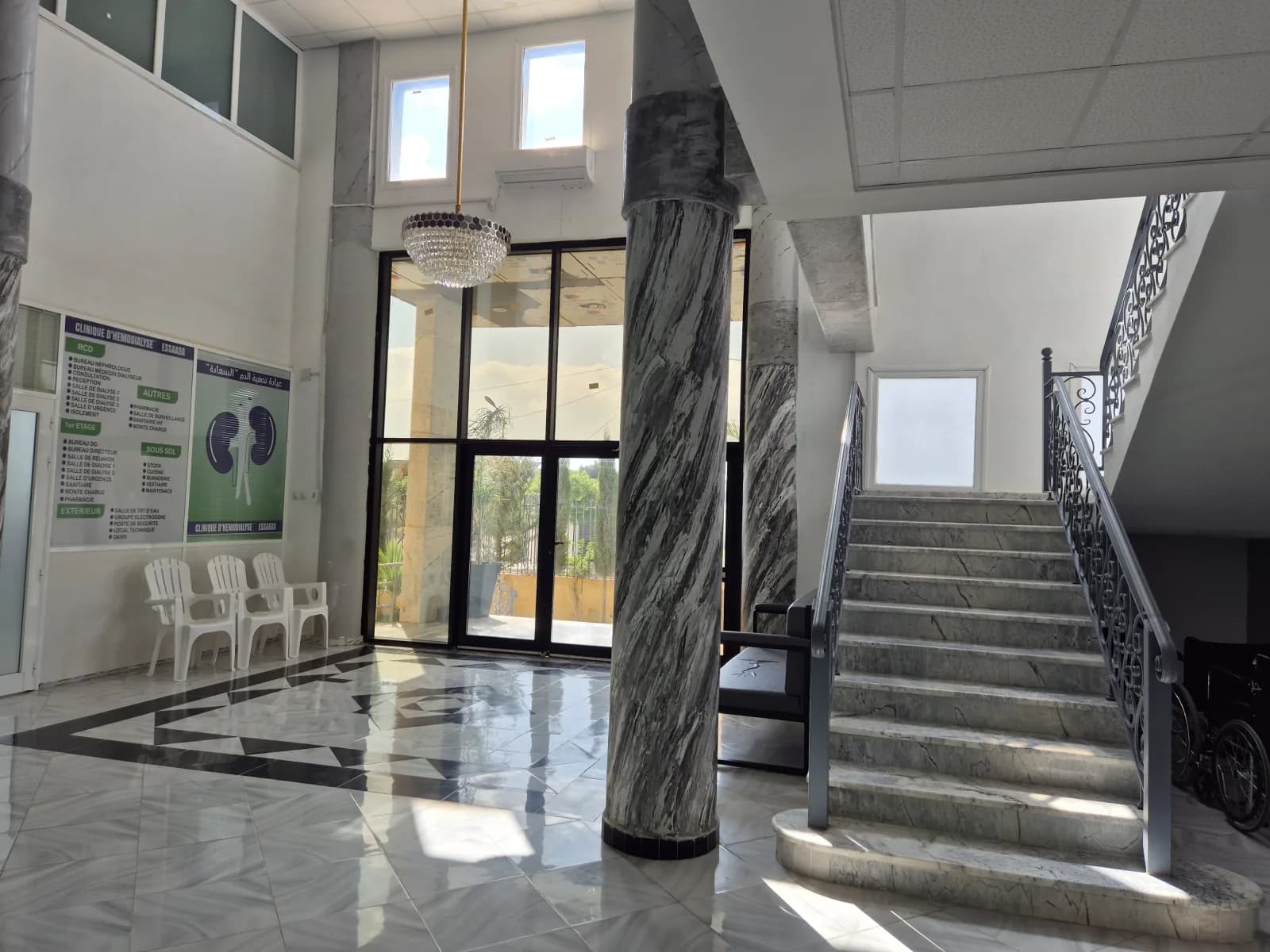
At the clinic
Your comfort, our priority
Hours, access, companions, safety — the practical details of your visit.
Session times
- 1ère séance : 05h00 — 09h00
- 2ème séance : 09h30 — 13h30
- Soir : 14h00 — 19h00
- 3 sessions per week as prescribed
- Les horaires peuvent être ajustés pour optimiser la prise en charge.
Ramadan hours
- First session at 4 a.m.
- No session after f'tour, no night-time slot
- Rescheduling in consultation with your nephrologist
- Care adapted for fasting patients
Access & parking
- Reserved spaces near the entrance
- Direct access for ambulances
Wheelchair accessibility
- Two access ramps for wheelchairs
- Signposted accessible parking spaces
- Wheelchair available at reception
- Accessible toilets
- Stretcher assistance on request
Refreshments
- Complimentary coffee during the session
- Water and drinks available
Companions
- A companion may be present during the first sessions
- Comfortable waiting room
- Coffee and tea available
Safety & quality
- Certified and inspected equipment
- Strict hygiene protocols
- A doctor on site at all times
Daily life
Dialysis, and life going on
Sport, travel, work, intimacy, parenthood, diet — kidney disease disrupts, but it does not erase. Here is what can be said about it, openly.
Sport and physical activity
Staying active is good for the body, the spirits and the treatment itself — it is strongly encouraged.
Walking, swimming, cycling, gardening, stretching: any regular physical activity is beneficial during the dialysis journey. It helps to maintain muscle tone, protects the heart, and improves sleep and mood on non-session days. There is no reason to put your life on hold.
For a more demanding return to sport — running, weight training, team sports, high-altitude hiking — a word with the nephrologist helps to adjust things according to your fistula, your blood pressure and your general fitness. The aim is never to forbid, but to adapt.
Protect your fistula arm from knocks and heavy loads — the rest of your body remains free.
Travel and journeys
Going away on holiday, visiting family in France or back home, performing the Umrah: all of this remains possible.
A trip is prepared with the team a few weeks in advance. We help to find a host centre at your destination — in Algeria as well as abroad — and to forward your medical file so that your sessions continue without interruption. Haemodialysis centres exist everywhere: Algiers, Oran, Marseille, Lyon, Paris, Mecca, Istanbul.
Remember to plan ahead for the administrative formalities (agreement of cover, travel insurance, prescriptions translated if needed). For patients from the diaspora returning to spend the summer in Sidi Bel Abbès, the arrangements are made in both directions with the same care.
Ideally let us know 4 to 6 weeks before departure so we can calmly arrange the sessions at your destination.
Working life
Continuing to work is often possible, and it is a real support — financial, social and personal.
Dialysis sessions set the rhythm of the week, but many patients keep up a working life. Early-morning or end-of-day slots free up much of the working day. As far as possible, we try to fit your sessions around your schedule constraints.
In Algeria, recognition as a disabled worker can be applied for through the social services: it sometimes opens the way to adjustments (working hours, role) or to a pension depending on the situation. Your treating doctor and the social worker can guide you through the process; there is no guarantee of success, but it is worth raising.
Tell us about your working hours from the very first appointment — we build the schedule together.
Intimacy and couple life
Kidney disease also affects intimate life — it is common, and it can be discussed without embarrassment during consultations.
Reduced desire, fatigue, erectile difficulties in men, dryness or cycle irregularities in women: these changes affect more than one patient in two. They combine the psychological burden of the illness, the treatments, and very real hormonal changes. It is neither all in the mind nor inevitable.
The nephrologist is there to talk about it, without judgement and in complete confidence — just like blood pressure or sleep. Solutions exist, sometimes simple ones: adjusting treatments, the opinion of a specialist colleague, psychological support for the couple. Talking about it already lifts part of the burden.
No question is out of place during a consultation. Intimacy is part of overall health.
Pregnancy and parenthood
Fertility is reduced in kidney failure, but a pregnancy remains possible — it must be carefully prepared.
For a woman on dialysis, carrying a pregnancy involves real risks for both mother and child: foetal growth restriction, premature birth, maternal complications. It is not forbidden, but it requires close monitoring between nephrologist, gynaecologist and maternity unit, with dialysis sessions often intensified during the nine months.
When a plan to have a child is in mind, reliable contraception is most often recommended while it is discussed calmly, and where possible postponing pregnancy until after a kidney transplant: transplantation markedly improves fertility and lowers the risks. Raise it early with your nephrologist — it is an important conversation, to be approached as such.
A plan for a baby, contraception to review: our support includes these questions.
Diet
Eating well on dialysis is above all about adapting well — there is no single diet that suits everyone.
Needs evolve throughout the journey: before dialysis, the aim is often to slow the worsening of kidney disease. Once sessions have begun, the priorities change — correcting excess water, potassium or phosphorus, but also preventing malnutrition, because eating enough remains essential. Diabetes, high blood pressure or other associated conditions further alter the balance.
The nephrologist links your blood test results and adjusts the recommendations to your real situation — your habits, your cooking, what you enjoy — rather than to a theoretical list of forbidden foods. The aim is a balance that is sustainable over time, not an impossible diet to follow.
Talk about your diet during a consultation whenever you feel the need — it is designed for you, not against you.
Preparing your visit
Questions before your first visit?
Opening hours, companions, documents to bring, meals — our team explains everything in advance.